

Brand level settings
These settings apply to all products and clients by default, unless they are specifically overridden at the product or contract product level.- Go to Settings > Order Options from the E-commerce Settings.
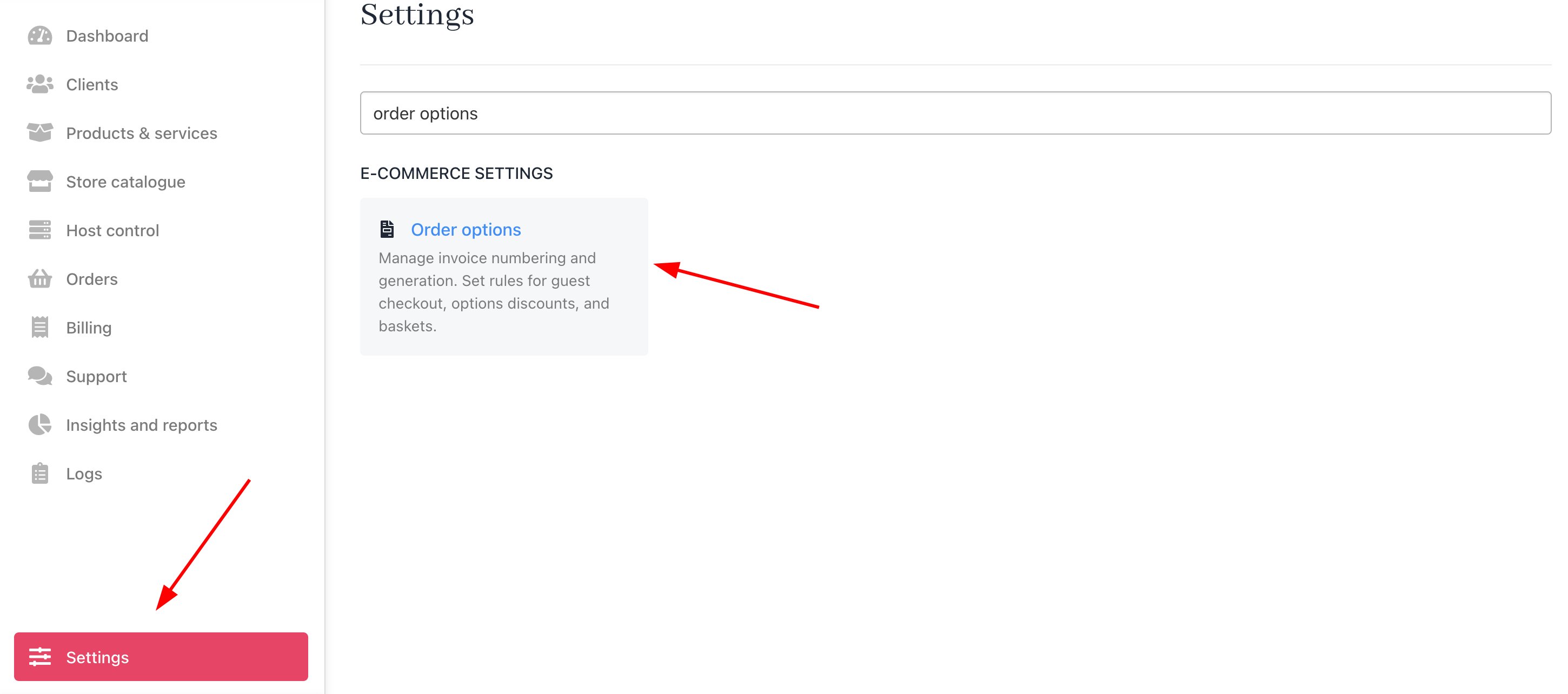
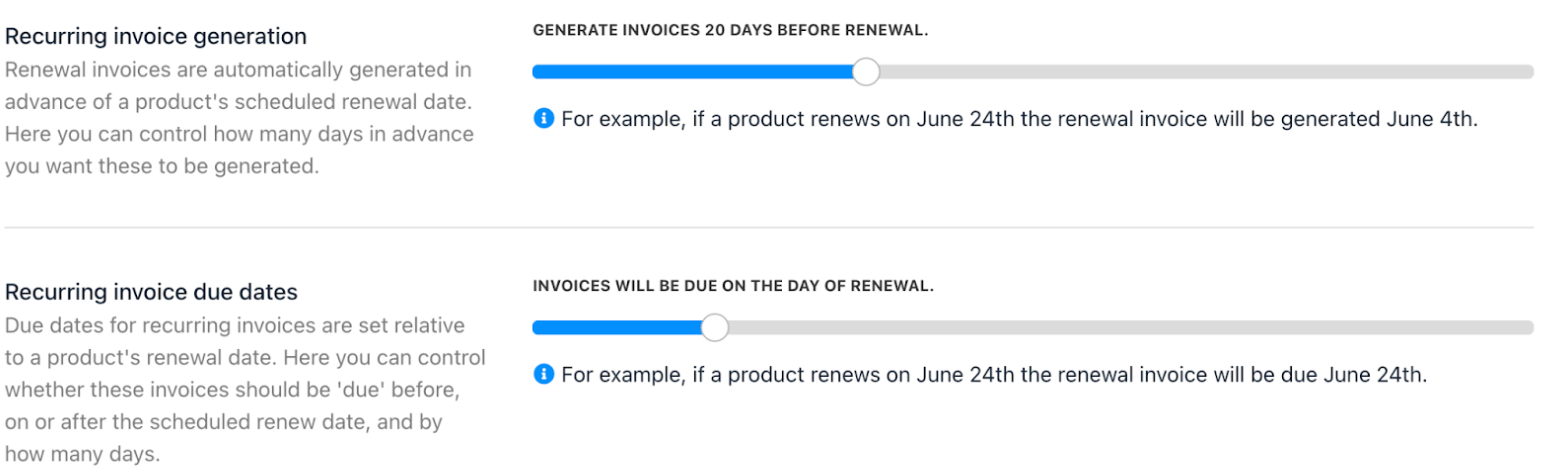
- Set when invoices are generated (e.g., on renewal date, or X days before).
- Define invoice due dates (immediate, or X days after generation).
- Save changes to apply globally.
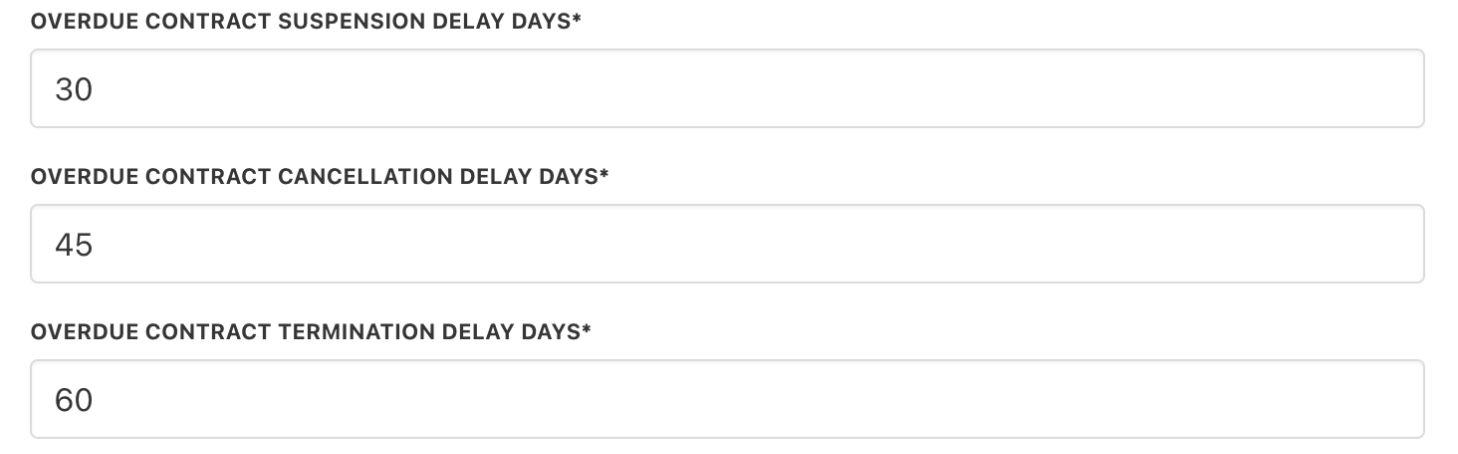
For the automation interval
- Go to Settings > Subscription Options under Branding & Customisation.
- Adjust contract product suspend, cancel, and close intervals.
- Save changes.
Product level settings
These settings override the brand level settings for specific products.-
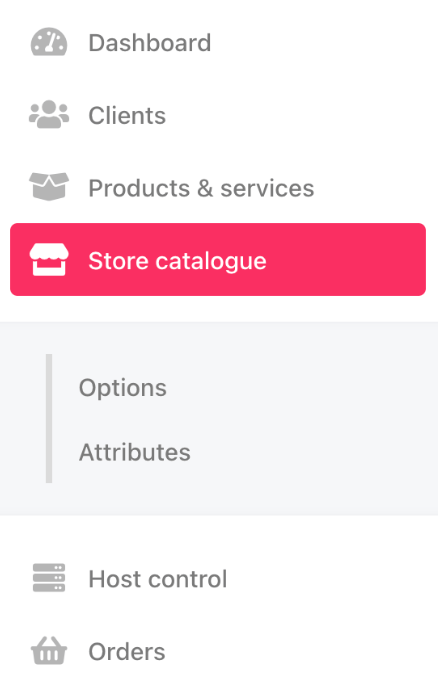
Go to Settings > Product Catalogue or directly from the
Store Catalogue. - Select a product, then open the Product Automation tab.
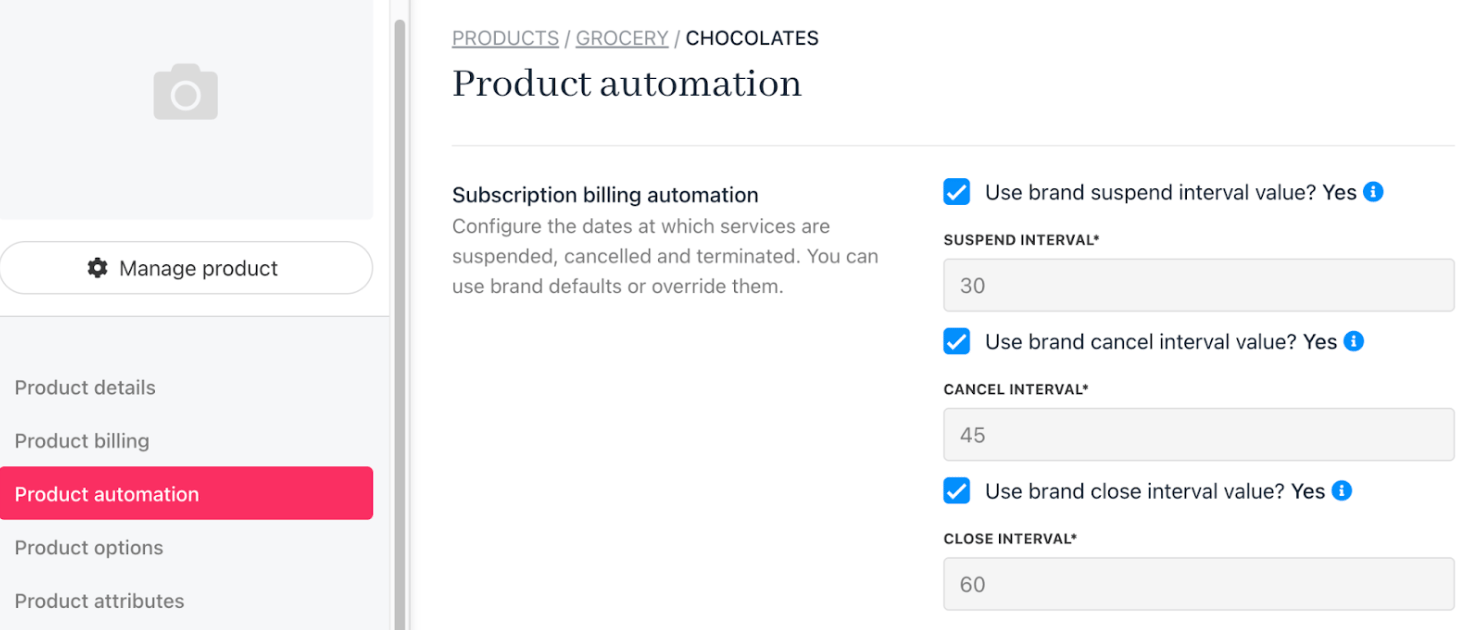
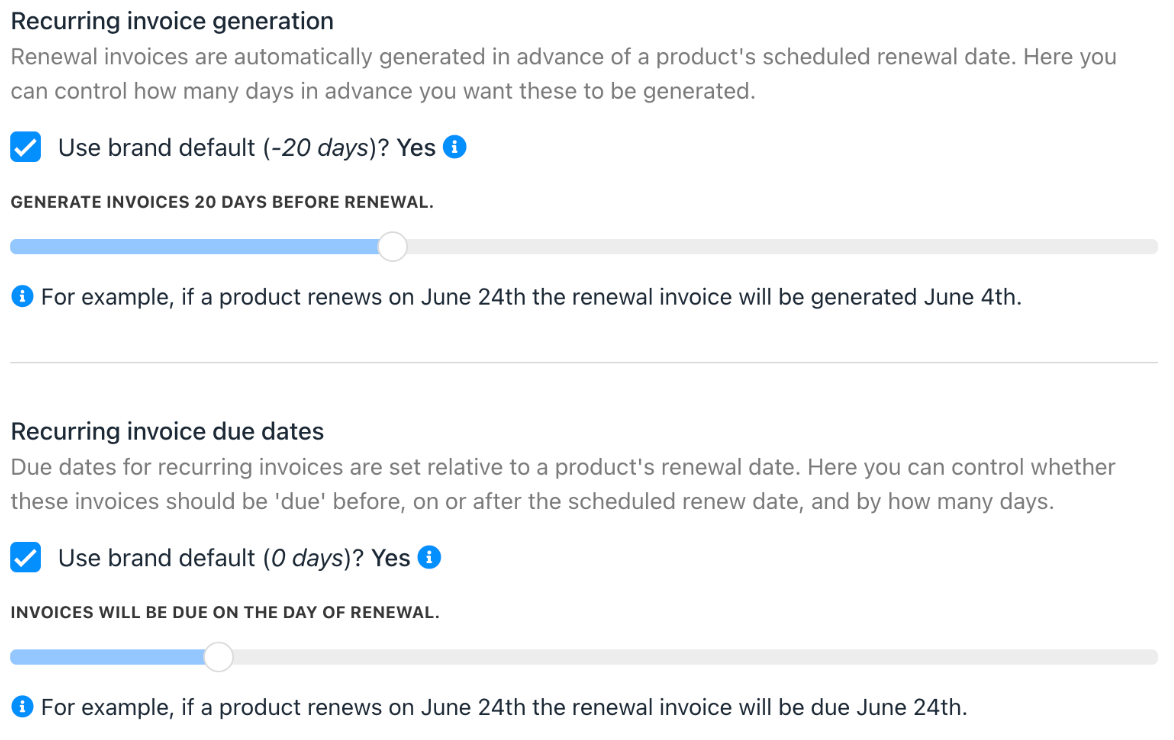
- Override global settings for invoice generation and due dates as needed.
- Save changes for product specific behavior.
Contract product level
These settings override both brand and product level configurations for specific clients’ contract products.-
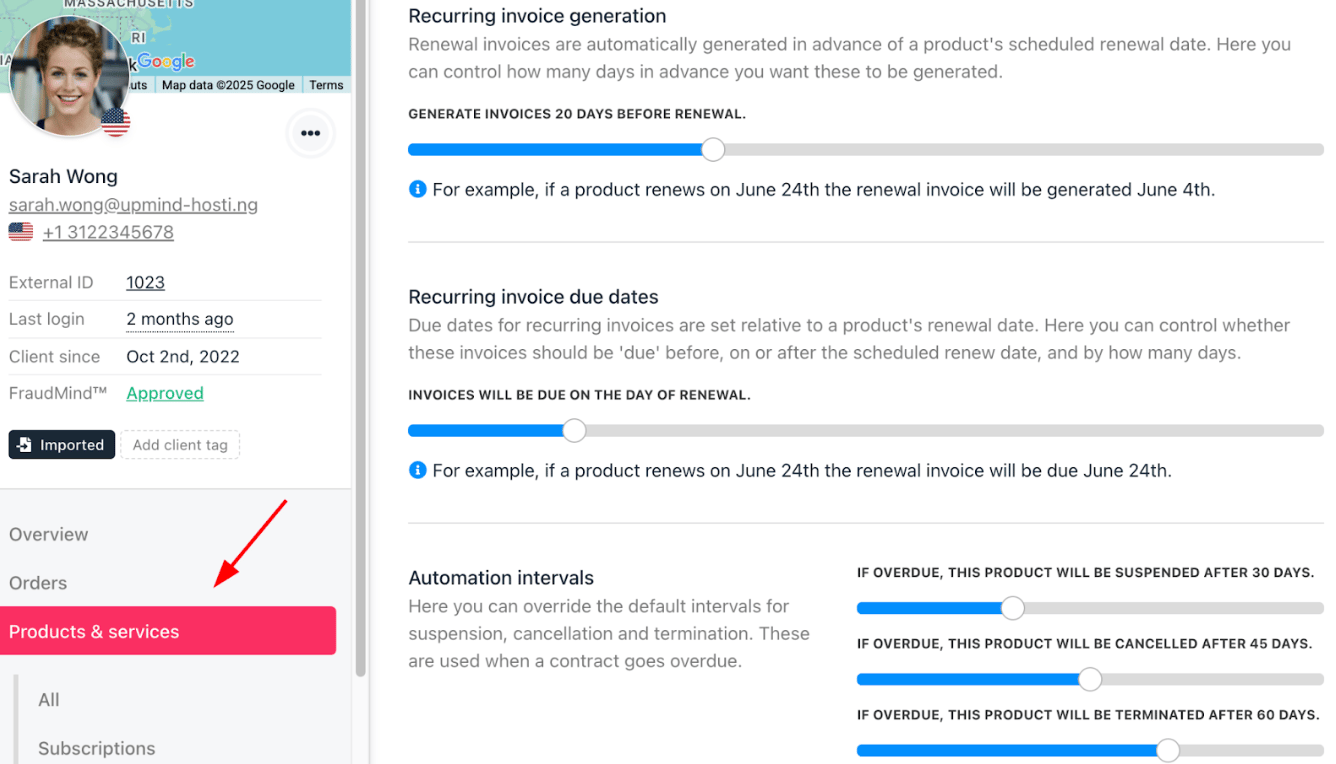
Go to
Clientsand select the client. -
Under
Products and Services, select the contract product. -
In the
Settingstab, override invoice generation, due dates, and automation intervals for this client’s contract. - Save to apply.
Common scenarios
Consolidation overrides automation intervals
When services are part of consolidation:- Automation interval settings are ignored.
- Invoice timing follows consolidation logic instead.
- Brand-level settings.
- Product-level settings.
- Contract product-level settings.