

Recurring payments and renewals can also be managed at the client level.
Manage global renewal automation settings
You can set global defaults for all recurring invoices and renewals.- Log in to your Upmind admin area.
-
Go to
Settingsand selectOrder Optionsunder Ecommerce Settings. - Scroll to Recurring invoice generation.
- Use the sliding scale to set how many days before the renewal date invoices are generated (e.g., generate invoices 7 days before renewal).

Generate invoices x days before renewal
- Find Recurring invoice due dates.
- Set the due date for renewal invoices to be a certain number of days on, before, or after the renewal date using the sliding scale.

Invoices will be due on the day of renewal
- Click Save to apply your settings.
Common scenarios
Why renewal timing differs from expectations
When consolidation is active:- Renewal invoices align with consolidation rules.
- Automation settings do not control timing for those services.
Manual status and its effect on renewal automation
A contract product’s status directly affects whether renewal automation applies. If a contract product is manually set to Active, for example, when it has an unpaid invoice or is approaching suspension, the system’s automation intervals will not act on it. The contract remains in its manually assigned status regardless of any configured suspend, cancel, or close intervals.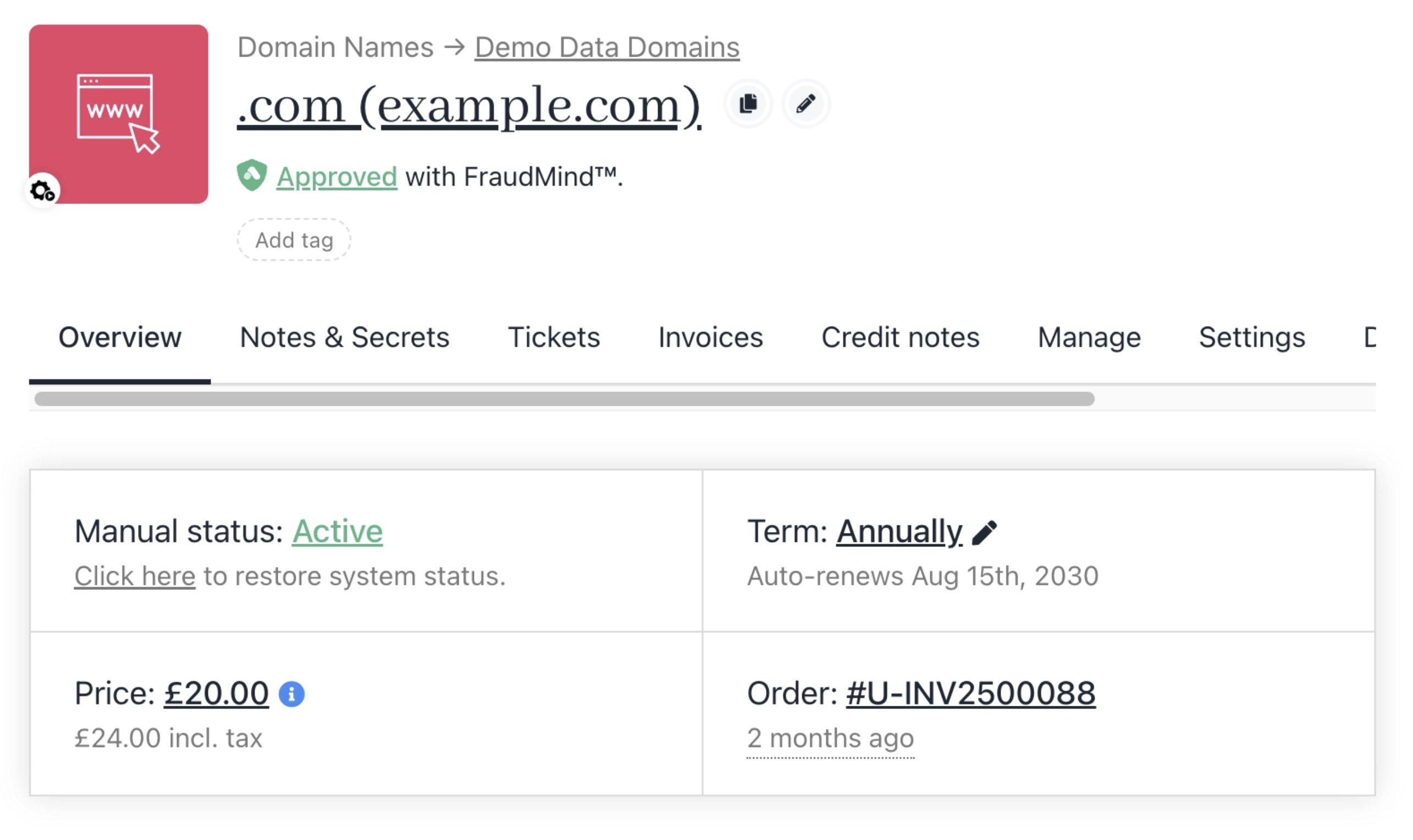
Active contract product